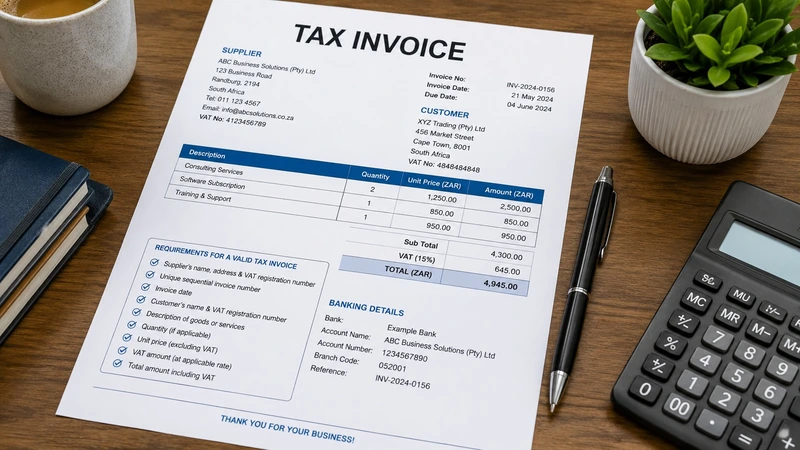

A debit note increases the amount of an invoice already issued. It is the mirror of a credit note, which reduces it. Both exist so that a document that has been sent is never edited.
When you need one
- A quantity was understated on the original invoice
- A rate was applied incorrectly, in the client's favour
- An agreed item was left off
- A discount was applied that should not have been
What a debit note is not for is additional work. New work is new work: quote it, then invoice it. Using a debit note to bill for something outside the original supply is how a client's finance team ends up with a document they cannot match to anything.
What it must contain
- The words Debit Note
- Your business details and VAT number
- The client's details
- Its own number, from its own sequence
- The date
- The number and date of the invoice it relates to
- The reason for the adjustment
- The additional amount, the VAT on it, and the new total
Credit note or debit note?
| Situation | Document |
|---|---|
| You charged too much | Credit note |
| You charged too little | Debit note |
| Goods returned | Credit note |
| Invoice cancelled entirely | Credit note for the full amount |
| Additional work agreed after invoicing | New quotation, then a new invoice |
Both adjust output tax in the period the note is issued, which is why they belong in your VAT records alongside the invoices themselves.
Common questions
Can I just send a second invoice for the difference?
It creates two documents for one supply and makes reconciliation harder. A debit note references the original, which is the point.
Does a debit note need its own numbering?
It should have its own sequence, separate from invoices and credit notes.
Do I have to tell the client first?
Not legally, but an undercharge correction that arrives without warning is the fastest route to a dispute.
Corrections keep their own numbering, so your invoice sequence stays intact.
Create your invoice- Value-Added Tax Act 89 of 1991, section 21
Disclaimer: This content is for general information only and does not constitute legal, tax, accounting or financial advice. Always confirm important requirements with SARS, the relevant authority or a qualified professional.