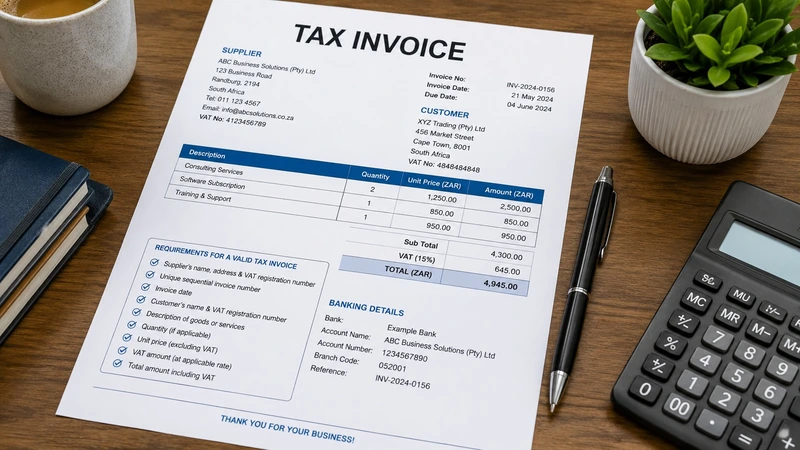

Invoicing international clients changes three practical things: the currency you bill in, how the money reaches you, and how long it takes. It also raises a VAT question that genuinely needs advice rather than a general article.
International clients and the VAT question
Whether a supply to a foreign client is zero-rated depends on the nature of the supply, where it is consumed, where the recipient is, and whether specific conditions in the VAT Act are met. Services in particular are not automatically zero-rated because the client is abroad.
Getting this wrong in either direction is expensive. Charging 15% where zero-rating applies overcharges your client. Zero-rating where it does not apply leaves you owing SARS the VAT out of your own margin. Confirm your specific position with a registered tax practitioner before you issue the first invoice, then apply that treatment consistently.
Currency
| Bill in | Suits | Watch |
|---|---|---|
| Rands | Simplicity, and your costs are in rands | Client bears the conversion, and may push back |
| Client's currency | Winning the work, easier for the client | You carry exchange movement between invoice and payment |
If you bill in a foreign currency, decide when the rate is fixed and say so on the invoice. Otherwise you and the client will disagree about which day's rate applied, usually in your disfavour.
Getting paid
- SWIFT transfer. Standard, slow, and both banks take a fee. Say who bears which.
- Payment platforms. Faster and often cheaper on smaller amounts. Check the effective rate, not the advertised fee.
- Longer terms. Build the extra clearing time into your due date rather than chasing on day 31.
Cross-border payments also attract reporting requirements from your bank, so expect to supply a reason for payment and supporting documents.
What goes on the invoice
- Your full business details, VAT number and registration number
- The client's full legal name and address, including country
- The currency, stated explicitly, not just a symbol
- A clear description of what was supplied and where it was performed
- Your banking details in the format the sending bank needs, including SWIFT
- Payment terms that reflect real clearing times
Common questions
Do I charge VAT to a foreign client?
It depends on the supply and whether the conditions for zero-rating are met. This is one to confirm with a practitioner rather than assume.
Which currency should I invoice in?
Rands protects your margin. The client's currency wins more work. Decide deliberately.
How long should terms be?
Longer than domestic. Clearing alone can take several days.
Set your details once and issue documents that carry everything a foreign client's bank will ask for.
Create your invoice- Value-Added Tax Act 89 of 1991
- SARS, Value-Added Tax
- SARS, Value-Added Tax
Disclaimer: This content is for general information only and does not constitute legal, tax, accounting or financial advice. Always confirm important requirements with SARS, the relevant authority or a qualified professional.