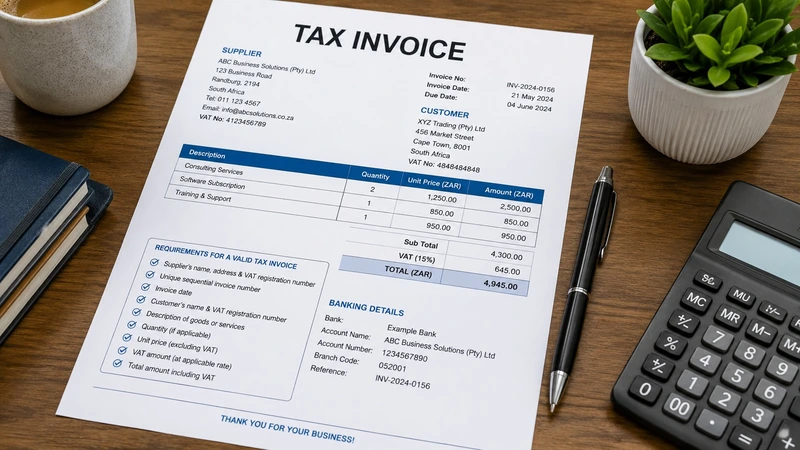

A tax invoice requests payment and supports a VAT claim. A receipt confirms payment was made. Proof of payment is evidence from the bank that money moved. Clients ask for the wrong one constantly.
Tax invoice, receipt and proof of payment: what each does
| Tax invoice | Receipt | Proof of payment | |
|---|---|---|---|
| Issued by | Supplier | Supplier | Bank or payer |
| When | On supply | On payment | On payment |
| Says | Money is owed | Money was received | Money was sent |
| Supports input VAT claim | Yes | No | No |
| Required fields set by law | Yes | No | No |
The line that matters: only the tax invoice supports an input tax claim. A client who files a receipt and discards the invoice has lost the claim, which is why finance departments chase invoices even after paying.
Where the confusion comes from
In retail, one document does both jobs. The till slip is the tax invoice and the receipt at the same time, which teaches everyone that the two are interchangeable. In business-to-business trade they are not, because supply and payment happen at different times.
What to do in practice
- Always issue the tax invoice on supply, not on payment.
- Issue a receipt if asked, but never in place of the invoice.
- Do not accept proof of payment as settlement until it reflects. A screenshot is not money in the account.
- Keep both sides. Your invoices and your suppliers' invoices are both part of the record.
Common questions
A client says they only need a receipt. Is that right?
If they are a VAT vendor, they need the tax invoice for the claim. Send both if they want a receipt as well.
Is proof of payment enough for my records?
No. It shows money moved. It does not describe what was supplied or how much VAT was charged.
Does a paid invoice need a receipt as well?
Not usually. Marking the invoice as paid is generally sufficient unless the client asks.
Issue the tax invoice on supply and mark it paid when the money lands.
Create a VAT-ready invoiceDisclaimer: This content is for general information only and does not constitute legal, tax, accounting or financial advice. Always confirm important requirements with SARS, the relevant authority or a qualified professional.