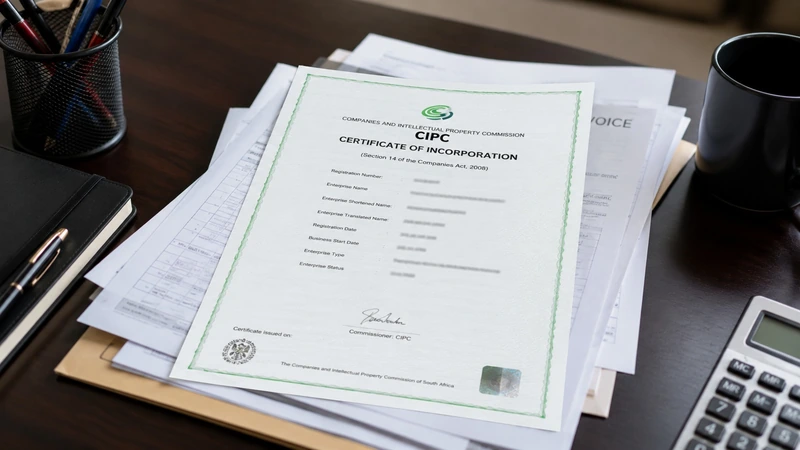

Sole proprietor or Pty Ltd is the first structural choice. A sole proprietor is you, trading under your own name or a trading name. There is no separate legal entity. A private company (Pty Ltd) is a separate legal person that owns its own assets and owes its own debts.
The practical difference is liability, tax and how much administration you carry.
Sole proprietor or Pty Ltd, side by side
| Sole proprietor | Private company | |
|---|---|---|
| Registration | None required | CIPC, from R125 |
| Legal separation | None. Business debts are your debts | The company is separate from you |
| Tax | Declared in your personal return at personal rates | Company tax, plus tax on what you take out |
| Annual returns | None to CIPC | Required every year |
| Financial statements | Not required | Required |
| Setup time | Immediate | Usually days |
| Client perception | Fine for most small work | Often expected for corporate and tender work |
When a sole proprietorship is the right answer
You are starting out, your work carries limited liability risk, your clients do not require a registered supplier, and your turnover is modest. The absence of annual returns and financial statements is a real saving, not a technicality.
Many successful small service businesses stay sole proprietorships for years, and there is nothing unprofessional about it.
When to incorporate
- Your work carries risk that could exceed what you can personally absorb
- You are tendering, or selling to corporates who require a registered supplier
- You have a partner and need to define ownership properly
- You are taking on staff or significant contracts
- Your profit is high enough that the tax position is worth modelling
That last point deserves an accountant rather than an article. The comparison depends on your numbers, what you draw and what you leave in the business.
Invoicing either way
Both send invoices, and both need the same core fields. A sole proprietor uses their own name or trading name and personal tax number where relevant. A company uses its registered name and registration number. If either of you is a registered VAT vendor, the tax invoice rules apply identically.
Common questions
Can I change from sole proprietor to Pty Ltd later?
Yes, and many businesses do. You register a company and move the trade across, which has tax consequences worth planning.
Do I need to register a sole proprietorship anywhere?
Not with CIPC. You still register for tax with SARS and may need local licences depending on what you do.
Does a Pty Ltd protect me completely?
Not absolutely. Directors can be held personally liable in some circumstances, and banks often require personal surety on credit.
Quote to Invoice works the same whether you are a sole proprietor or a company. Free to use.
Start invoicingDisclaimer: This content is for general information only and does not constitute legal, tax, accounting or financial advice. Always confirm important requirements with SARS, the relevant authority or a qualified professional.