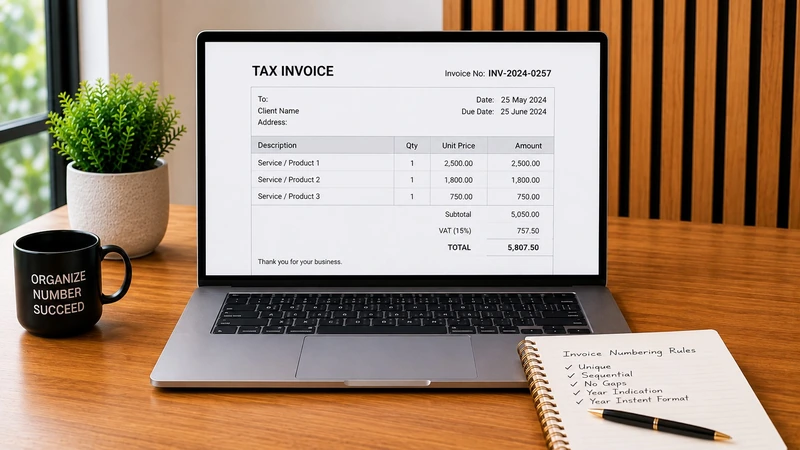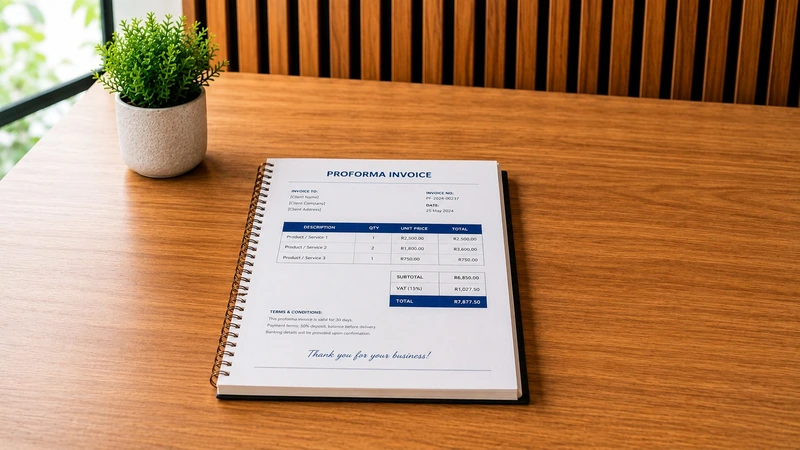

A customer statement lists everything outstanding on an account: invoices issued, payments received, credit notes, and the balance owing. It is not an invoice and it does not replace one.
It is also the single most requested document in a collections conversation, because it is what a finance department needs to reconcile.
Customer statement or invoice?
| Invoice | Statement | |
|---|---|---|
| Covers | One supply | A period, or an account |
| Demands payment | Yes | Summarises what is owed |
| Numbered sequentially | Yes | Not required |
| Claim input VAT | Yes | No |
| Typical timing | On supply | Month end, or on request |
What to put on it
- The client's name and account details
- The period covered
- Every invoice in the period, with number, date and amount
- Payments received, with dates
- Credit notes applied
- The closing balance
- An ageing breakdown: current, 30, 60, 90 days
The ageing breakdown is what makes a statement useful rather than decorative. It shows at a glance which invoice is the problem.
When to send a letter of demand
- Month end, to any client with an open balance. Routine, expected, unremarkable.
- With a second follow-up on an overdue invoice. It reframes one late payment as an account position.
- On request. Accounts departments ask for statements constantly when reconciling.
Sending statements monthly does something a chase email cannot: it makes the conversation about the account rather than about one invoice, and it makes you look like a business with a system.
Common questions
Does a client have to pay against a statement?
They pay against the invoices it lists. The statement is the summary, not the demand.
Should I send a statement to a client with no balance?
There is no need. Some businesses do it anyway to confirm the account is clear.
Do statements need to carry VAT numbers?
A statement is not a tax invoice, so section 20 does not apply. Your business details should still be on it.
Quote to Invoice produces a statement for any client from the documents already on their account.
Create your invoiceDisclaimer: This content is for general information only and does not constitute legal, tax, accounting or financial advice. Always confirm important requirements with SARS, the relevant authority or a qualified professional.