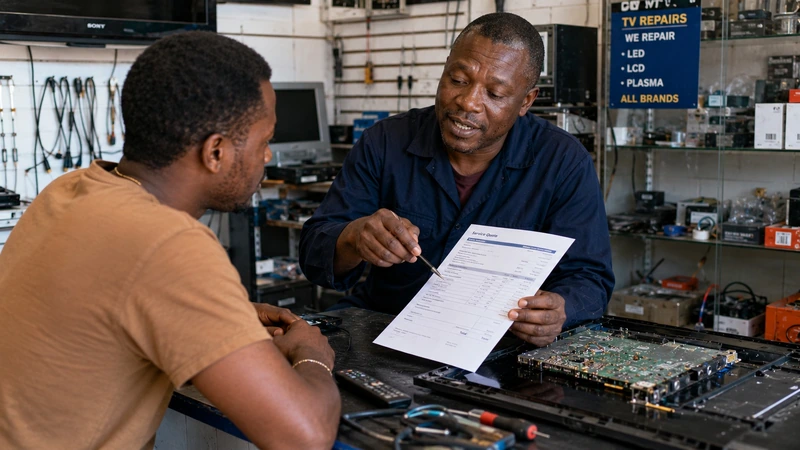

When a client makes a partial payment against an invoice, you record it against that invoice and leave the balance outstanding. You do not issue a new invoice for the difference, and you do not write off the shortfall quietly.
Why a partial payment does not get a second invoice
A second invoice for the balance creates two documents for one supply. Your client's finance system now has an original invoice, a part payment and a new invoice that looks like additional work. Reconciliation stops being possible and the query that follows costs more time than the balance is worth.
The account should read: one invoice, one part payment, one balance.
Why partial payments happen
| Reason | What to do |
|---|---|
| Agreed deposit or staged payment | Expected. Record it and invoice or chase the balance on schedule |
| Client disputes part of the invoice | Find out which part today. A dispute you learn about at day 60 is much harder |
| Cash flow at their end | Ask for a date for the balance and diarise it |
| A payment error | Usually a transposed figure. A phone call fixes it |
| They deducted something | Bank charges, a set-off, a penalty. Get it in writing |
The middle rows are the ones worth acting on quickly. A part payment is often a client's way of raising a dispute without saying so.
Recording it properly
- Record the amount received and the date against the original invoice
- Leave the balance showing as outstanding
- Send an updated statement so the client can see the arithmetic
- Confirm in writing what remains and when it is due
The statement does the work here. It shows the invoice, the payment and the balance in one document, which is exactly what an accounts department needs to release the rest.
Common questions
Does a part payment affect VAT?
The VAT was accounted for when the tax invoice was issued. A part payment does not change that.
Should I issue a receipt for the partial amount?
You can. Marking the payment against the invoice is usually sufficient unless the client asks.
What if the shortfall is tiny?
Decide a threshold in advance and apply it consistently rather than case by case.
Record payments against the invoice and the outstanding balance updates itself.
Create your invoiceDisclaimer: This content is for general information only and does not constitute legal, tax, accounting or financial advice. Always confirm important requirements with SARS, the relevant authority or a qualified professional.